Our Services
- pmtleevacuum.com
- Services
Our Services
- Precision
- Quality
- Reliability
High Vacuum Heat Treatment
Processing for Critical Components
Key Benefits:
processing for critical components
Minimum surface reactions
Ideal for critical aerospace and defense components
Superior metallurgical results
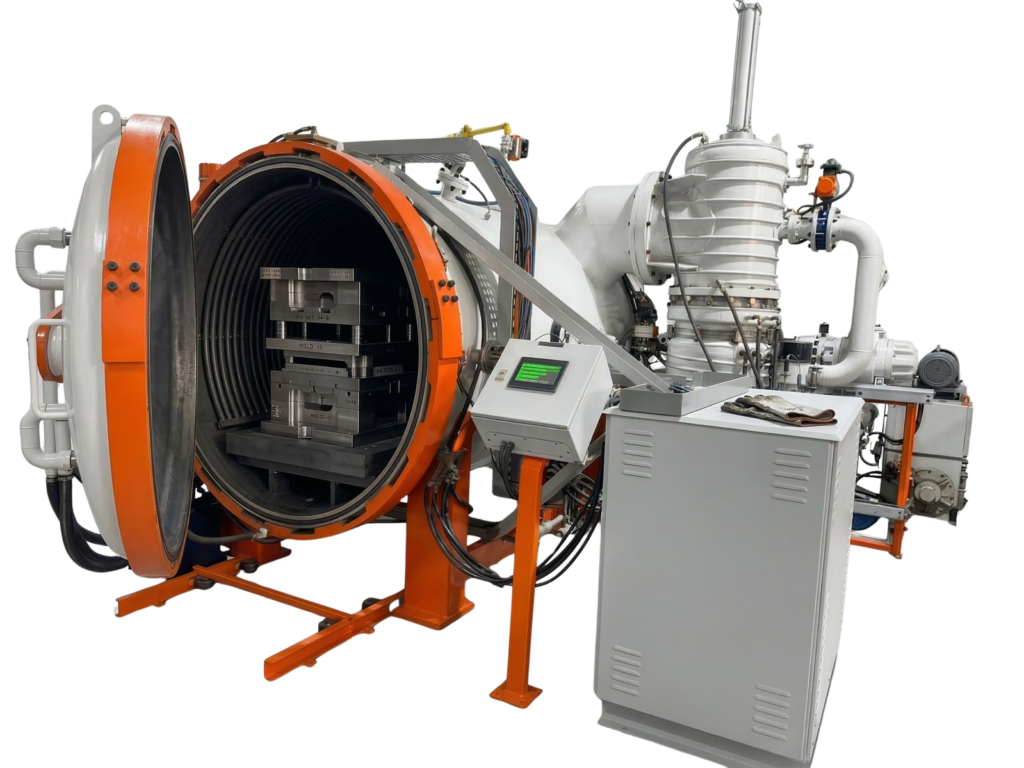
Vacuum Heat Treatment
Precision Processing in Oxygen-Free Environment
Key Benefits:
Minimal distortion
Uniform heating and controlled cooling
Zero oxidation and decarburization
Bright, clean surface finish
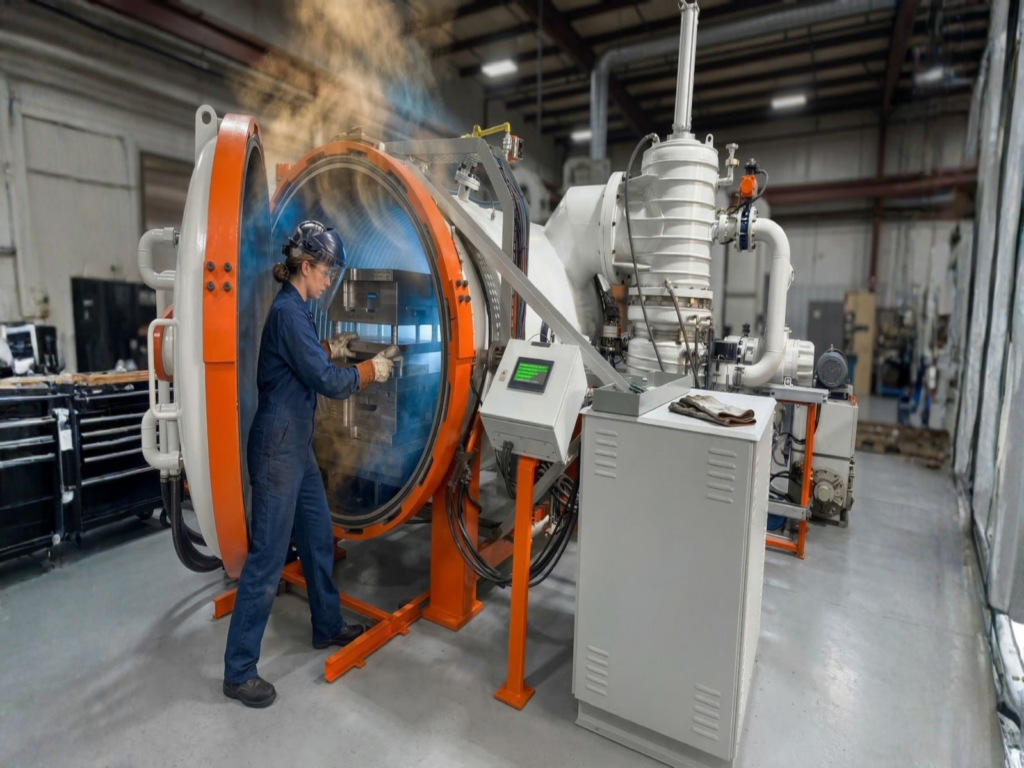
Precipitate / Aged Hardening
Maximum Strength for Specialty Alloys
Precipitation hardening is a heat treatment technique used to increase the yield strength of malleable materials. Aging is a low-temperature process that precipitates hardening phases in materials previously solution treated. Our precise temperature control ensures optimal precipitate formation, delivering superior mechanical properties, corrosion resistance, and dimensional stability.
Key Benefits:
Achieves maximum strength and hardness
Enhances corrosion resistance
Precise temperature control
Enhances dimensional stability
Materials
SS420, SS440C, PH Stainless Steels, M300, NIMAX
Partial Pressure Heat Treatment
Controlled Atmosphere for Consistent Chemistry
Key Benefits:
Prevents alloying element evaporation
Maintains consistent material chemistry
Ideal for high-temperature processing
Ensures repeatable results
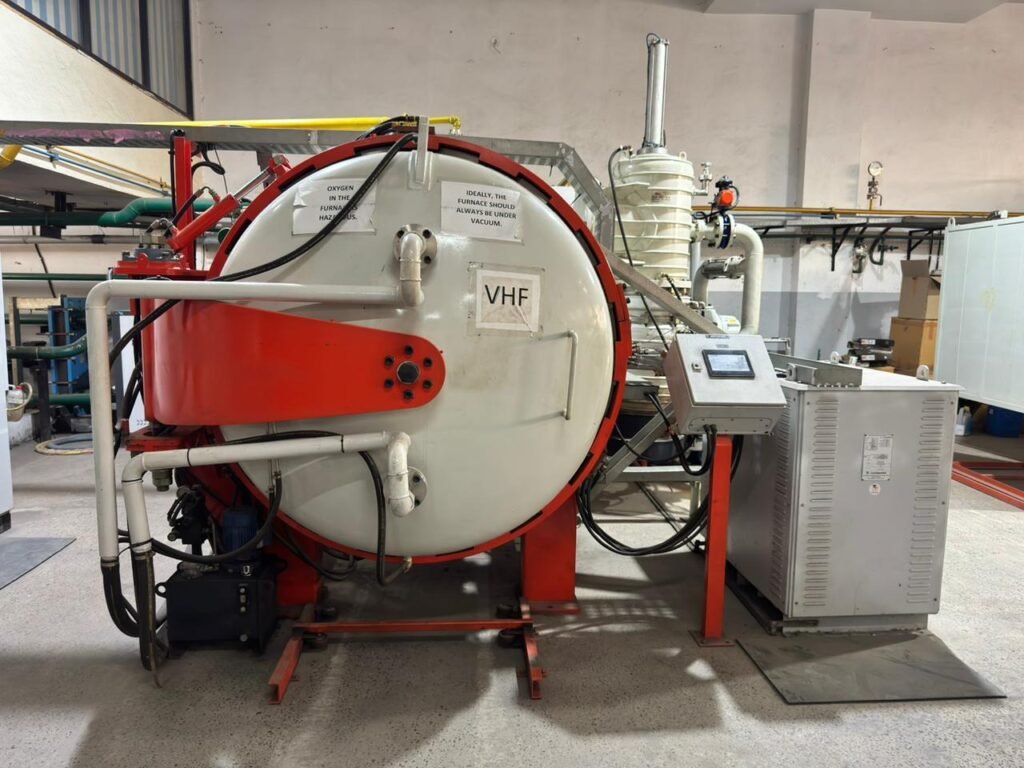
Solution Treatment
Homogenization for Uniform Microstructure
Key Benefits:
Dissolves soluble phases
Achieves homogeneous microstructure
Prepares materials for aging treatment
Improves mechanical properties
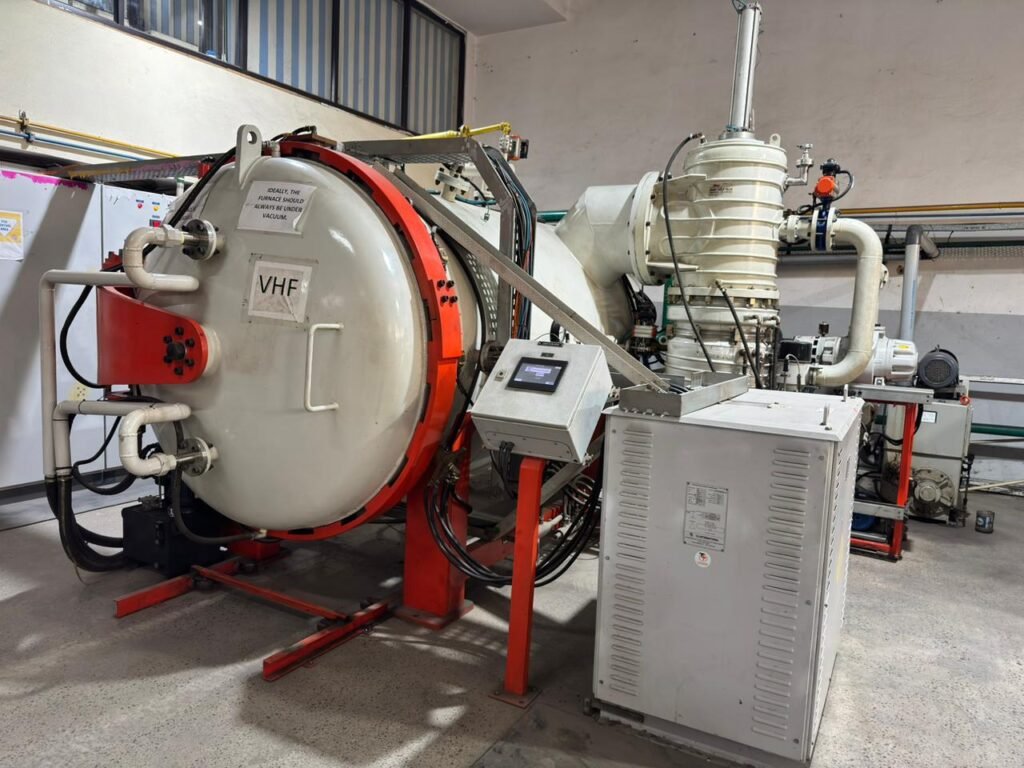
Vacuum Annealing
Softening Without Surface Degradation
Key Benefits:
Elasticity, deformability & machinability
Relieves internal stresses
Oxide-free surface finish
Maintains material cleanliness
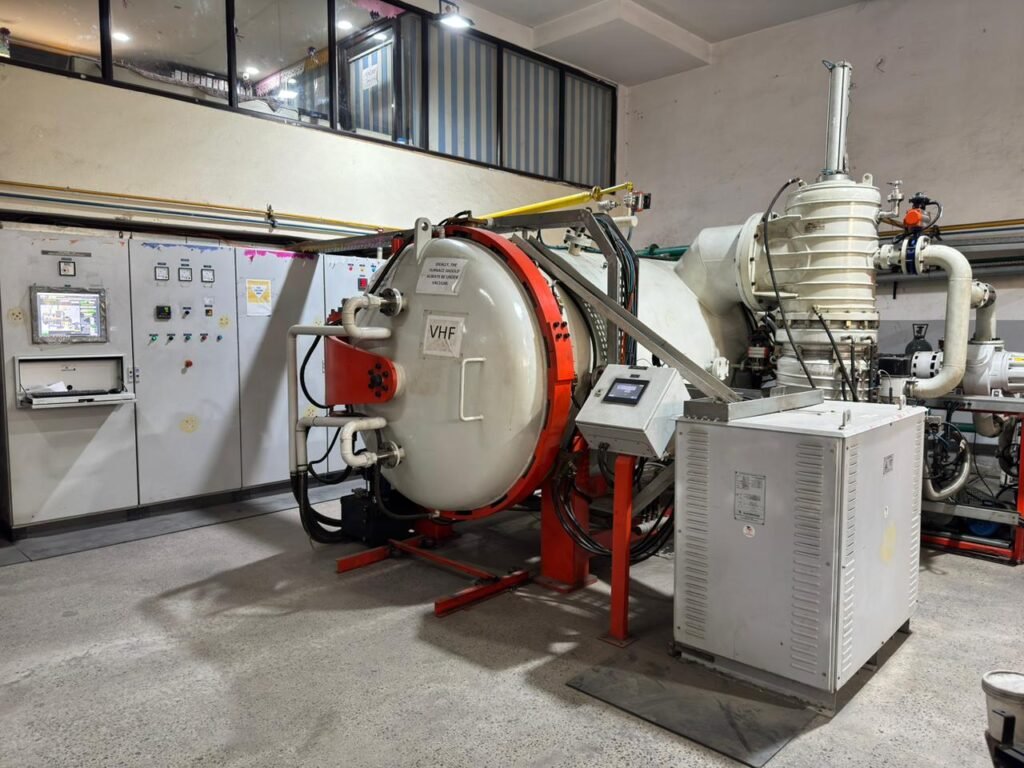
Normal Annealing
Conventional Softening for Improved Workability
Key Benefits:
Softens material for machining
Refines grain structure
Improves workability
Relieves internal stresses
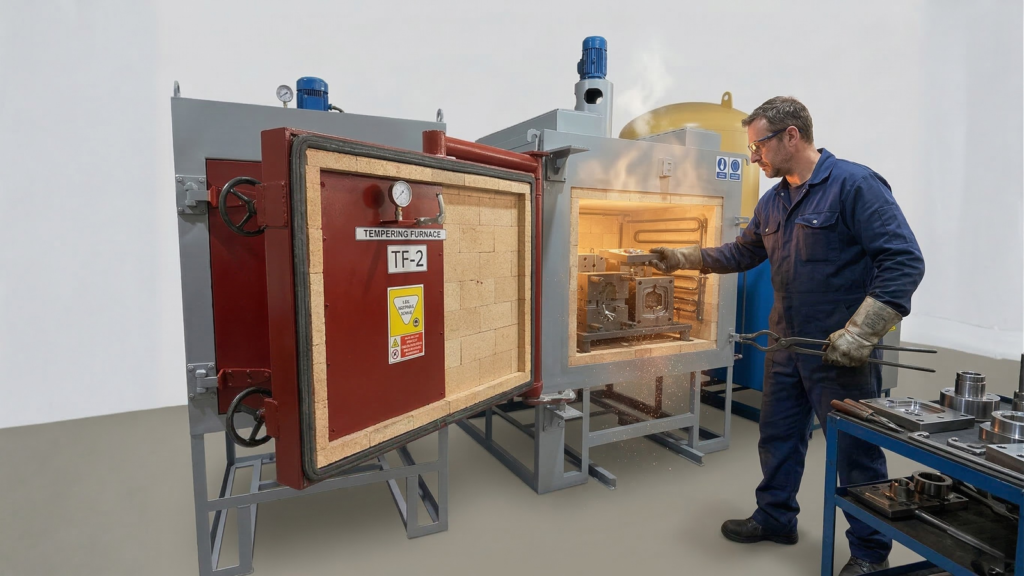
Vacuum Tempering
Achieving Target Hardness with Clean Surface
Key Benefits:
Achieves target hardness and toughness
Relieves quenching stresses
Clean, oxide-free surface
No post-treatment cleaning required
Vacuum Toughening
Enhanced Toughness for Demanding Applications
Key Benefits:
Optimizes strength-toughness balance
Enhances impact resistance
Suitable for high-stress applications
Clean, oxide-free surface
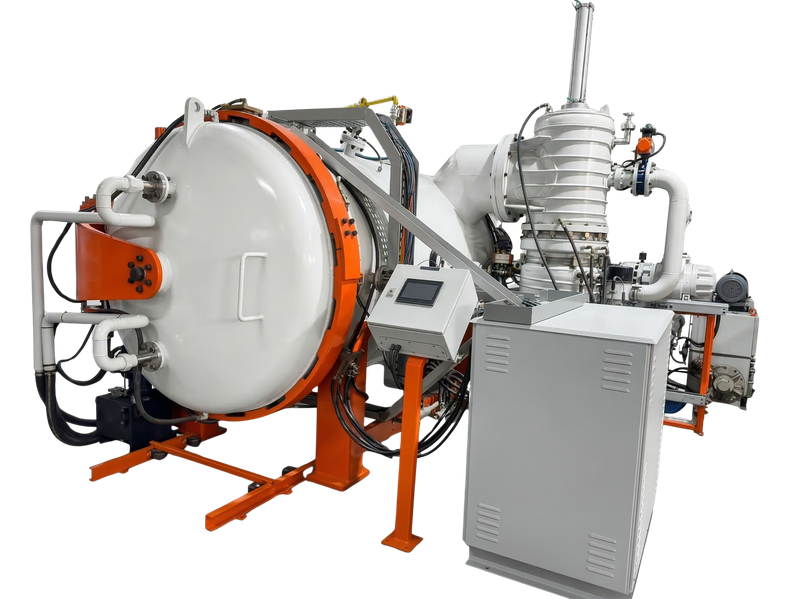
Vacuum Stress Relieving
Eliminating Internal Stresses
Vacuum stress relieving is a low-temperature heat treatment process that removes internal stresses—such as internal, process, or machining stresses—induced by machining, welding, forming, or prior heat treatment. This ensures dimensional stability and prevents distortion during subsequent processing or service.
Key Benefits:
Eliminates internal stresses
Prevents distortion
Improves dimensional stability
Suitable for all materials
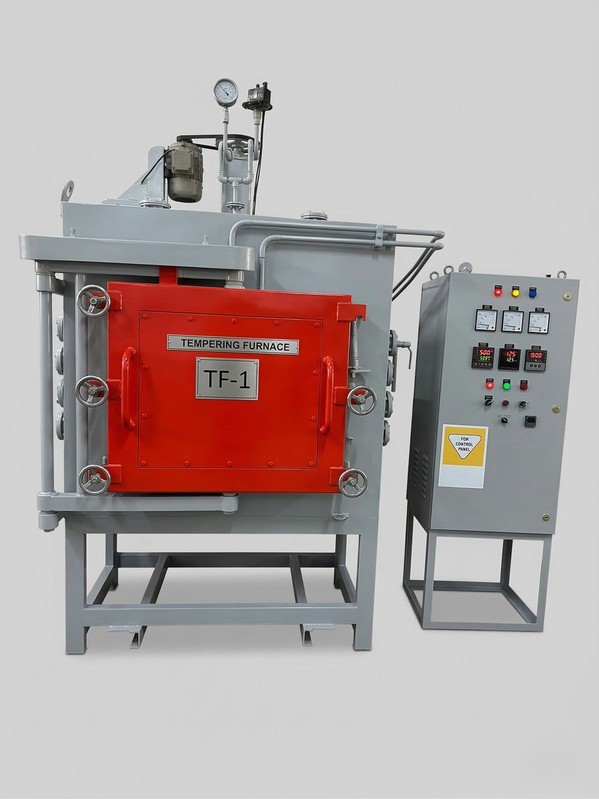
Atmospheric Tempering
Conventional Tempering for Desired Properties
Key Benefits:
Reduces brittleness
Achieves target hardness
Improves toughness
Optimizes mechanical properties
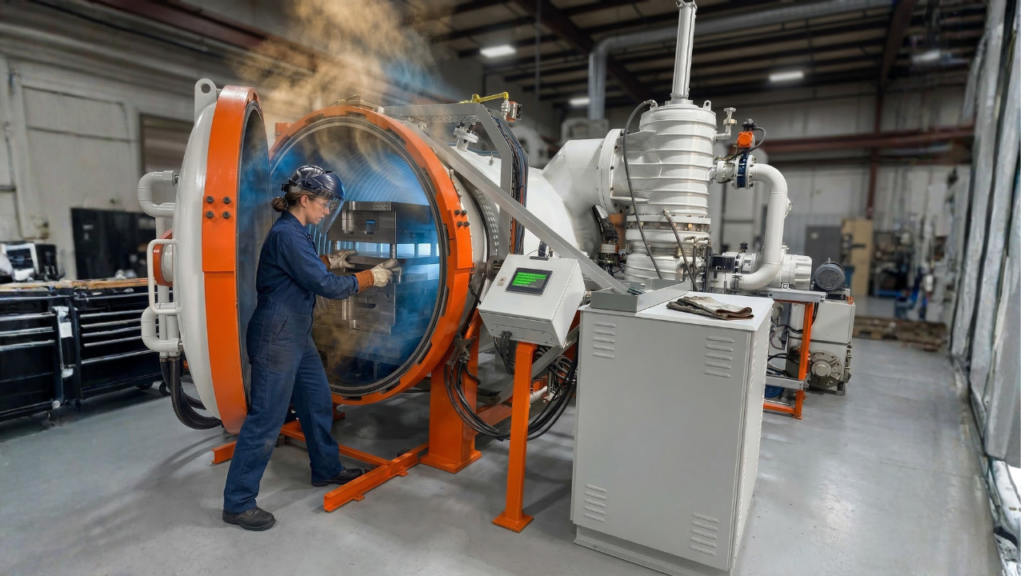
Specialized/Customized Heat Treatment
Tailored Cycles for Unique Special Requirements
Key Benefits:
Custom cycles for unique requirements
Expert metallurgical consultation
Process development and validation
Complete documentation and traceability
Cryogenic Treatment / Sub-Zero Treatment
Complete Martensitic Transformation for Enhanced Wear Resistance
Retained austenite in hardened steel can reduce dimensional stability and
wear resistance. Our cryogenic treatment, Capable of reaching -120°C, converts retained austenite to martensite. This
results in improved hardness, toughness, and dimensional stability, significantly
extending tool life.
Key Benefits:
Converts retained austenite to martensite
Enhances wear resistance and toughness
Improves dimensional stability
Extends tool life
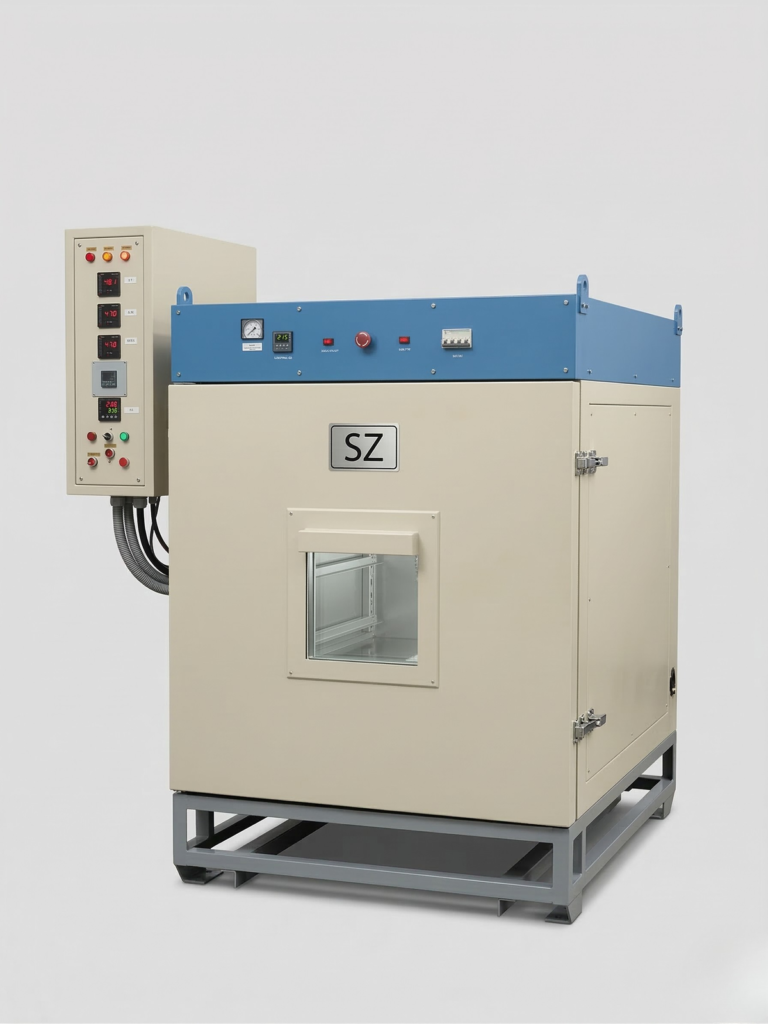
Capability
Chamber capable of attaining -120°C